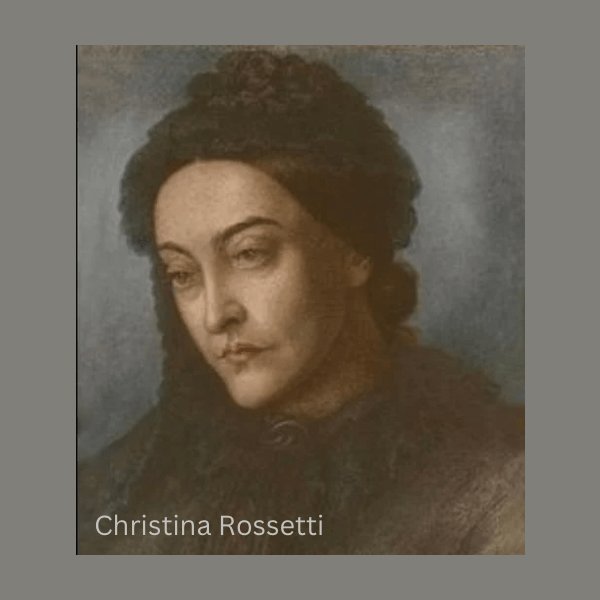
Christina Rossetti nació en Londres en 1830 y murió en 1894 fue una de las voces más importantes de la poesía victoriana inglesa perteneció a una familia de tradición artística su hermano fue Dante Gabriel Rossetti uno de los fundadores del movimiento prerrafaelita comenzó a escribir poesía desde la infancia y desarrolló una obra marcada por la espiritualidad la reflexión moral el amor la pérdida y una fuerte imaginería simbólica
publicó The Goblin Market and Other Poems 1862 The Prince’s Progress and Other Poems 1866 Sing Song A Nursery Rhyme Book 1872 A Pageant and Other Poems 1881 y Verses 1893 también escribió poesía religiosa y literatura infantil su obra fue muy reconocida en su tiempo y posteriormente revalorizada por la crítica moderna y lecturas feministas a menudo se la compara con Emily Dickinson por la intensidad simbólica y la exploración de lo espiritual en lo cotidiano
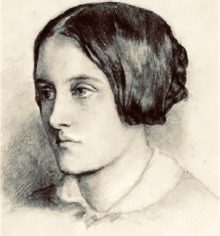
CANCIÓN
«Cuando esté muerta, mi amor,
No cantes tristes canciones para mí,
No plantes rosas en mi cabeza
Ni sombríos cipreses:
Sé la hierba verde sobre mí,
Con rocíos y gotas mójame;
Y si te marchitas, recuerda;
Y si te marchitas, olvida.
Ya no veré las sombras,
No sentiré la lluvia,
No escucharé al ruiseñor
Cantando su dolor:
Y soñando a través del crepúsculo
Que no crece ni desciende,
Felizmente podría recordar,
Y felizmente podría olvidar».
Traducción: Luis López Nieves
SONG
When I am dead, my dearest,
Sing no sad songs for me;
Plant thou no roses at my head,
Nor shady cypress tree:
Be the green grass above me
With showers and dewdrops wet;
And if thou wilt, remember,
And if thou wilt, forget.
I shall not see the shadows,
I shall not feel the rain;
I shall not hear the nightingale
Sing on, as if in pain:
And dreaming through the twilight
That doth not rise nor set,
Haply I may remember,
And haply may forget.
Recuerda
Recuérdame cuando me haya ido lejos,
muy lejos, a la tierra silenciosa;
cuando no puedas tomarme de la mano
sin girar para irme, quedándome al girar
ni yo, dudando en partir, quiera todavía permanecer.
Recuérdame cuando no haya más el día a día
donde hablabas del futuro que planeaste
solo recuérdame, tú entiendes
será tarde para consejos o plegarias.
Y aunque debas olvidarme por un momento
para luego recordarme, no te aflijas:
porque la oscuridad y la corrupción dejan
un vestigio de los pensamientos que tuve
mejor de lejos deberías olvidar y sonreir
y recordar y estar triste.
Remember me when I am gone away,
Gone far away into the silent land;
When you can no more hold me by the hand,
Nor I half turn to go yet turning stay.
Remember me when no more day by day
You tell me of our future that you plann’d:
Only remember me; you understand
It will be late to counsel then or pray.
Yet if you should forget me for a while
And afterwards remember, do not grieve:
For if the darkness and corruption leave
A vestige of the thoughts that once I had,
Better by far you should forget and smile
Than that you should remember and be sad.